.webp)
%20LinkedIn%20blog.webp)
SkyPath operates the world's largest turbulence observation network, collecting 9 billion turbulence samples annually from equipped aircraft globally and growing. This comprehensive coverage draws from patented SkyPath observations, ADS-B-derived reports, EDR data, and PIREPs. Yet even with this extensive observational coverage, data voids exist - particularly at high altitudes, on uncommon routes, or during low-traffic periods.
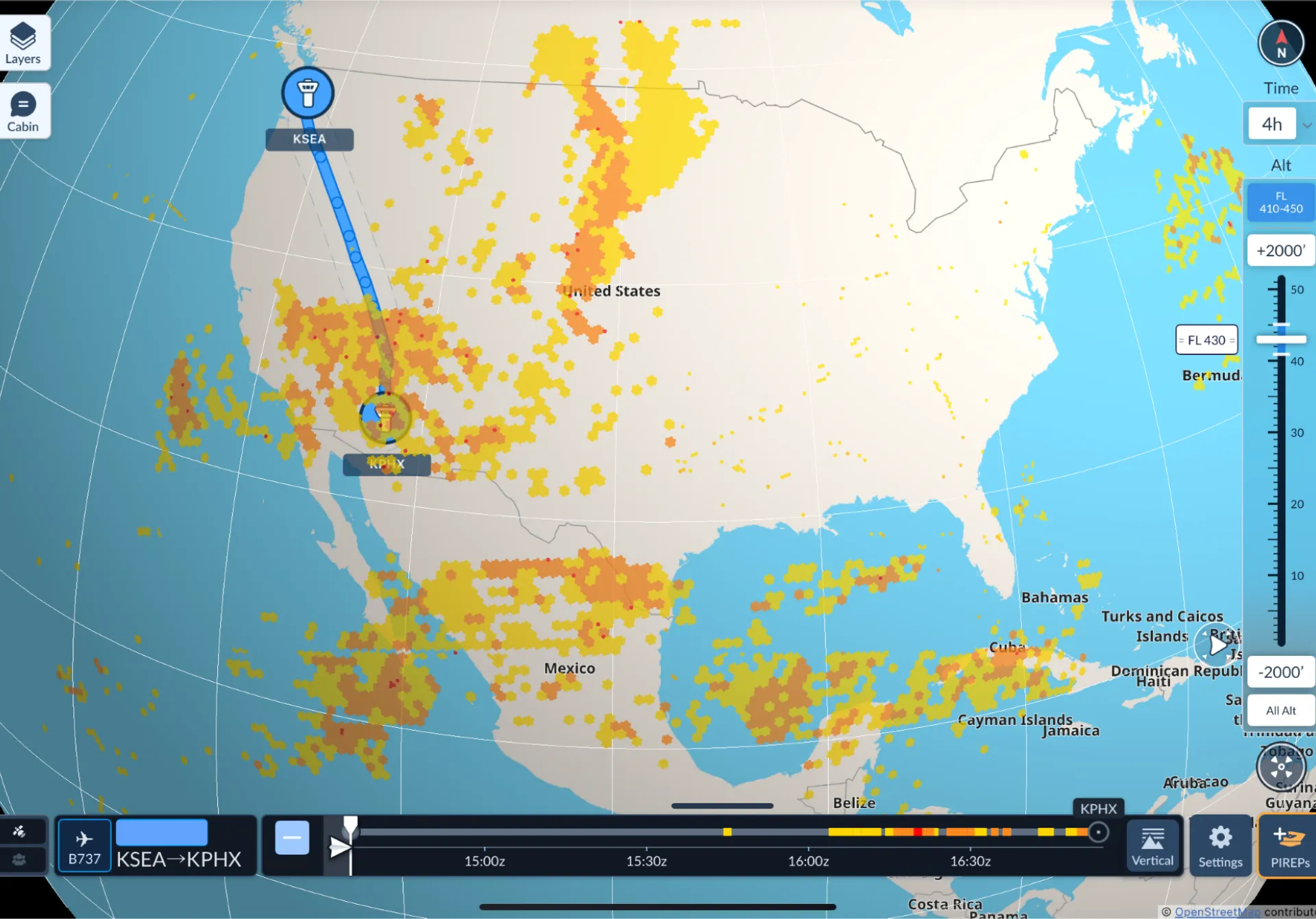
This is the gap SkyPath Nowcasting was designed to close. Using state-of-the-art machine learning that combines observational data with meteorological parameters, it delivers predictive turbulence intelligence up to 12 hours ahead, with over 90% accuracy, ensuring complete coverage even where real-time reports are unavailable.
The Technology Behind the Prediction
The AI-based Nowcasting model is highly sophisticated, using hundreds of parameters to make its predictions. It draws on raw meteorological parameters from models such as Zeus AI, GFS, and HRRR, including wind shear, temperature, wind speed, and pressure. It also incorporates more complex factors such as topography, land cover, climate belts, and thermodynamic potentials.
Importantly, the model covers all types of turbulence and causes, including:
- Clear Air Turbulence (CAT)
- Convective turbulence
- Jet streams
- Synoptic fronts
- Mechanical turbulence (such as mountain waves)
SkyPath utilizes billions of data points to validate and continuously enhance its model. The model also predicts smooth conditions, displayed in a route corridor along a flight's path.
Where Nowcasting Shines
The Nowcasting prediction model is most valuable in specific scenarios where reported observational data is inherently limited:
1. High Altitudes At very high flight levels, fewer aircraft are actively reporting turbulence. Nowcasting fills this gap, providing reliable turbulence intelligence where observational data is naturally sparse.
2. Uncommon Routes Flights over less-traveled routes, such as transoceanic paths or new domestic routes, often have limited observational data history. Nowcasting ensures comprehensive turbulence awareness, even on these uncommon routes, by leveraging meteorological parameters and predictive modeling.
3. Early Morning Hours During certain times of the day, particularly early morning, there may be lower volumes of commercial air traffic, leading to fewer real-time turbulence observations. The prediction model is invaluable during these hours, offering reliable intelligence when observational crowdsourcing is at its lowest.
While ADS-B data offers valuable real-time observations, Nowcasting goes beyond by actively predicting turbulence in areas, times, and altitudes where reported data is limited. Together, they create a single, comprehensive ride-quality data layer.
By integrating this sophisticated prediction model, SkyPath provides complete and robust turbulence coverage, making air travel safer and more predictable, regardless of the time of day, altitude, or route.
Ready to see how SkyPath Nowcasting can enhance your flight operations? Schedule a demo today.


%20(3000%20x%202250%20px).webp)